

When I first arrived in Santa Cruz in 1984, Chiquitania felt like a landscape held in a state of grace. I had the enormous good fortune to live in Concepción, a small town in the heart of the region, at a time when deforestation was a distant rumor from the Brazilian Amazon or the Andean piedmont. It was a complex, beautiful landscape with a mosaic of deciduous forests, savannas and a precious network of wetlands teeming with wildlife. It was paradise made even more magical by its cultural history that was deeply imbedded in its towns and Indigenous villages, particularly Concepción, San Ignacio de Velasco, and San Javier, which were founded more than 300 years ago as Jesuit missions. These towns and the Indigenous villages that surround them represent a unique cultural fusion where about a dozen Indigenous ethnicities and European religious beliefs created a singular identity, the Chiquitanos.
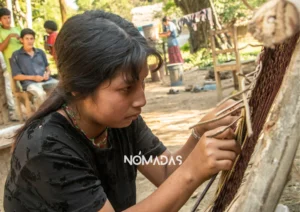
The 1980s also saw a movement to awaken and renew one of the most remarkable aspects of Chiquitano culture. Baroque music, which was infused into the cultural milieu three centuries ago, is now being performed again on handmade instruments in the mission churches, where the carved wooden altars and painted walls testify to the artistic achievements of Indigenous craftsmen. UNESCO recognized this heritage by designating the Jesuit Missions of Chiquitos as a World Heritage Site, but the real preservation has always been the work of the Chiquitanos themselves, who carry the music, the liturgy, and the sense of community forward as a matter of daily life. Their identity is the region’s cultural foundation and a major tourist attraction that has evolved into a pillar of the regional economy.
The Chiquitanos were not in control of their destiny, however. For decades, they had shared the land and its resources with the descendants of the Spanish settlers (Cruceños) who replaced the Jesuits as the colonial (later republican) authorities. The Cruceños controlled access to land and resources, while establishing low intensity cattle farms and logging a select few of the region’s hardwood timber species. The Chiquitanos provided the labor, working as ranch hands and timber cutters on land that had once been their collective domain. The social contract was not fair but it had the sheen of legitimacy in a world defined by the dominant culture of Western society.
I am not naïve. I knew that deforestation would eventually come to Chiquitania, but I believed the threat was cattle ranching, which was already well established and expanding. I (and others) believed that we could convince the region’s inhabitants to embrace a development model based on sustainable pasture and forest management. We had reasons for optimism. Forest management pilot projects were underway where Chiquitano communities were developing some of the first community forestry plans in the Amazon basin, and progressive ranchers were experimenting with rotational grazing that reduced pressure on standing forest. Underlying our assumptions was the belief that the region was not at risk from industrial-scale agriculture.
Our logic was grounded in the manifest attributes of the Precambrian Shield, the geological formation that defines the region’s landscapes and ecosystems, including its landmark mountain chains (serranías) and hill country (lomerío) where the Bosque Seco Chiquitano is found over superficial soils rich in minerals derived from the granitic rocks that limit the depth of the soil profile. These strikingly beautiful landscapes are juxtaposed with rolling plains where erosional processes spanning millions of years have formed deep, red-clay soils that are highly acidic and plagued by aluminum toxicity. Because they are inherently infertile, they have spawned a unique and specialized flora, a savanna-matorral which in Brazil is referred to as the Cerrado, a biodiversity hotspot of global importance.
By the 1990s, our understanding of the region’s natural history had morphed into complacency as the scientific community, of which I am part, had convinced ourselves that Chiquitania was “not apt for agriculture.” Our beliefs were reinforced by the Plan de Uso del Suelo (PLUS), a regulatory document financed by The World Bank and ratified by the Bolivian government, that we hoped would guide future investment in productive systems. The PLUS envisioned a future in which the region’s forests would remain largely intact, managed under long-term concessionary contracts that would supply the domestic and export timber markets, while Indigenous territories would anchor a mosaic of communal farms and protected areas. It was a rational plan built on the assumption that the soils themselves would enforce the boundaries that policy alone could not. We assumed Chiquitania would eventually evolve into an economy dominated by Indigenous farms, cattle ranches and public forests managed by corporations with long-term timber contracts.
We were wrong. The first cracks in our complacency appeared with the arrival of Mennonite immigrants with a deep, intuitive understanding of agriculture. Beginning in the late 2000s, Mennonite colonies expanded eastward from their established settlements on the alluvial plain of the Río Grande into the heart of Chiquitania, purchasing land at prices that seemed generous to sellers who had no idea what the land would soon be worth. The Mennonites understood that the chemical limitations of the red clay soils of the Cerrado landscapes had a chemical solution, one that had been developed by the Brazilian research agency (EMBRAPA) in the 1980s. The solution requires a significant investment in soil amendments, specifically the massive application of agricultural lime (CaCO3), but solves the problem of acidity and, in turn, resolves aluminum toxicity.
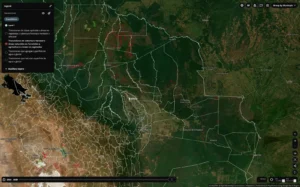
EMBRAPA’s technological package has transformed the Brazilian Cerrado into the world’s most productive agricultural landscape, while directly causing the conversion of about 20 million hectares of biodiversity-rich natural habitat. In Chiquitania, the technology has already impacted about 150,000 hectares, particularly in a vegetation type known locally as “pampa monte.” The pace of clearing accelerated after 2019, when the government implemented policies to expand the agricultural frontier. Following the lead of the Mennonites, experienced farmers moved to buy holdings with cultivated pastures, which has motivated some ranchers to expand their spatial footprint into landscapes less attractive to farmers, particularly the bosque altos that are rich in timber resources. It is hard to predict where this will end, but conceivably Chiquitania could lose two million hectares of forest cover over the next decade, including lands set aside as a protected area, forest reserve or Indigenous territory.
As the forests fall and the savannas are converted, the regional water cycle will change. The loss of the deep-rooted trees will disrupt the water cycle that sustains the region’s rainfall regime, while degrading the wetlands that conserve its scarcest resource: water. In Brazil, deforestation in Cerrado and forest habitats has led to an increase in the frequency and severity of drought, which has amplified the probability of forest fires. In 2024, Chiquitania experienced the most devastating fire season in its recorded history, consuming nearly 1.3 million hectares of forest in a catastrophe that sent smoke across the continent. The fires were ignited by land-clearing burns that escaped control to spread across forests that had been turned into a tinderbox by loggers who had increased their harvest of the increasingly valuable hardwoods. The government of Evo Morales abandoned efforts to promote sustainable forest management. What has taken its place is a frenzy of timber exploitation in public forests that are probably destined for clearing anyway.
The impacts of climate change are particularly serious in places like Chiquitania where changes in productive systems are amplified by social forces that threaten the livelihoods of its Indigenous people. The land rush stimulated by intensive agriculture has not only attracted Mennonites and Cruceños, but also small farmers from the Andes and investors from Brazil, Argentina and beyond. The dispossession happens in stages: first the forests that sustained hunting and traditional agriculture are degraded by logging and wildfire; then the land is sold off, often with the collusion of governmental authorities via questionable transactions that exploit the precarious legal status of the territorial claims of Indigenous communities.
Looking back at the Concepción I knew forty years ago, I now see the error in my thinking and the deficiencies in the PLUS, whose authors failed to look over the border and understand the technological change then underway in Brazil. Since then, the Brazilians have converted more than 50% of the Cerrado biome in their country, far more when compared to its vast Amazonian forest. The Brazilian development model has many shortcomings, but the soy boom, underway for three decades, has also created enormous wealth and provided economic opportunities for tens of millions of its citizens.
Fortunately, Brazil has a uniquely designed forest law (O Código Florestal) that, however imperfectly enforced, establishes the principle that private landowners must maintain a significant percentage of their holdings as natural vegetation. Brazil, for all its contradictions, has shown a remarkable capacity to demarcate and defend Indigenous territories and nature reserves, in large part because of the institutional capacity of agencies like IBAMA, ICMBio and FUNAI, which are staffed by civil servants hired for their technical competence rather than their political affiliation. More importantly, perhaps, is the role of independent public prosecutors willing to confront the power brokers that ignore environmental laws designed to protect public welfare. Bolivian society, including the autonomy-loving Cruceños, would be well advised to look over the border and see what their neighbors are doing regarding environmental regulation.
I was motivated to write this essay after a recent visit to Santa Rosa de la Roca, a small town in the heart of the new agricultural frontier. I was the guest of a group of entrepreneurs investing in agricultural enterprises based on the EMBRAPA production model. I soon discovered they were not rapacious predators seeking profit at all costs, but small businessmen looking for a reasonable return on their investments. Most are intent on creating a family legacy and understand that long-term success requires them to become stewards of the land, particularly soil resources.
While in the region, I also took the opportunity to visit a family that I have known since I led a research program in Noel Kempff Mercado National Park. Our friendship dates from the early 1990s, when their men would join our team as forest guides and whose women would host my family in a rustic lodge in Florida, a village on the south edge of the Park. Like families everywhere, they have many challenges, but they did mention that the local economy was booming and that everybody had a job, a not insignificant fact in a country beset by poverty and inequality.
I wish them all well. My new and old friends, alike.
Incidentally, I learned that all but one member of the family from Florida had relocated from their village to San Ignacio de Velasco. There are, apparently, no job opportunities for skilled forest guides or Indigenous tourist operators within the Park, which is also a UNESCO World Heritage Site. Clearly, the conservation community, of which I am part, has failed the communities of what is now the Indigenous Territory of Bajo Paraguá. In 1996, the year the Park was expanded from 750,000 to 1.5 million hectares via the first avoided deforestation project (a precursor to REDD+) and the inhabitants were promised a prosperous future based on ecotourism, job opportunities linked to scientific research and a shared role in park management funded by revenues from carbon markets. Unfortunately, thirty years later, none of that has come to pass.
***